Hardwood Floors Refinished, Repaired and Installed in Alpharetta

We find out why a floor looks the way it does before we sand, patch or replace a single board.

Alpharetta Wood Flooring has spent 20+ years refinishing, repairing and installing wood floors in Alpharetta, GA, from sanding tired oak back to bare wood to replacing carpet, rebuilding stairs and fixing boards lost to water or termites. We work on the floors people already live on, and every job starts with finding out why the floor looks the way it does before we decide what to do with it.

Most calls begin with a symptom: boards that cupped over a humid summer, a finish worn through in the hallway, a dark stain where a dog kept having accidents, or an inspection report that turned up damage a week before closing. Each of those has a cause below the surface, and a floor that is sanded or patched without dealing with the cause usually shows the same problem again within a season.

This page walks through the problems we see, the ways we bring an existing floor back, how we put new wood down, and the paperwork side of floors that comes with closings, insurance claims, HOAs and rentals. If you already know what you need, the estimate starts with a visit and a moisture reading, not a price per square foot read over the phone.

Get Your Free Quote

Fast response • No obligation

So we can reach you about your request.

So we can send you a confirmation after you submit this inquiry form.

  • 20+ Years on Wood Floors
  • Moisture Readings Before Sanding
  • Stairs Quoted Tread by Tread

What we do

Our Services

Wood floor refinishing, repair and installation in Alpharetta, GA

Worker walking backwards while rolling clear finish across sanded oak floors in the dining room of an Alpharetta house.

Wood Floor Refinishing

Hardwood sanded to bare wood and refinished, with the wood left above the tongue checked first and stain samples laid on your own floor.

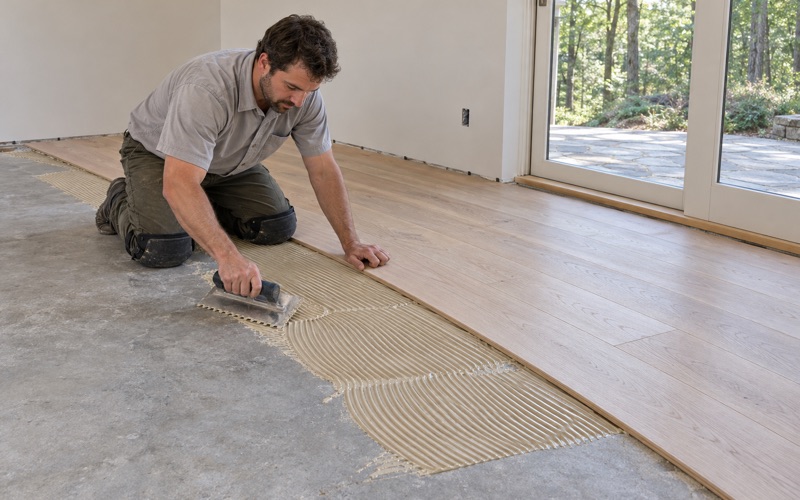
Worker troweling adhesive onto a concrete subfloor for engineered hardwood in the lower-level room of an Alpharetta home.

Engineered Hardwood Flooring

Engineered wood floors installed on slabs, terrace levels and upper floors, with the wear layer and installation method matched to each room.

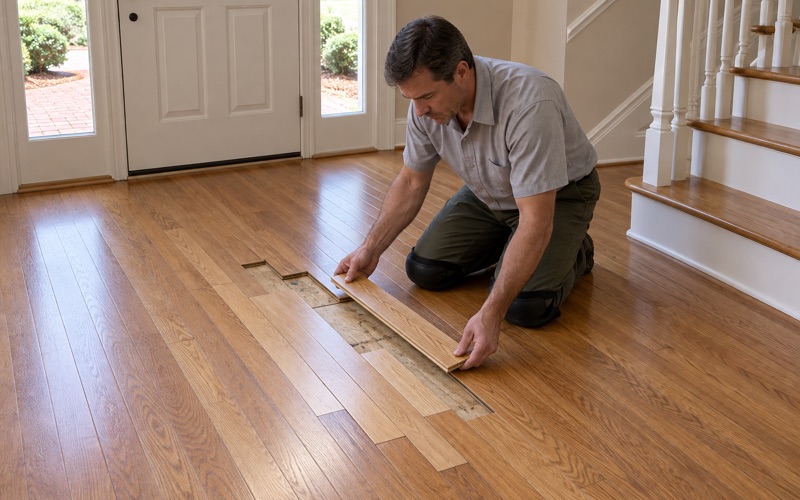
Worker lowering a replacement oak board into a staggered lace-in repair in the foyer floor of an Alpharetta house.

Hardwood Floor Repair

Squeaks, gaps, hollow spots and damaged boards repaired with matching stock, woven into the floor so the fix does not show.

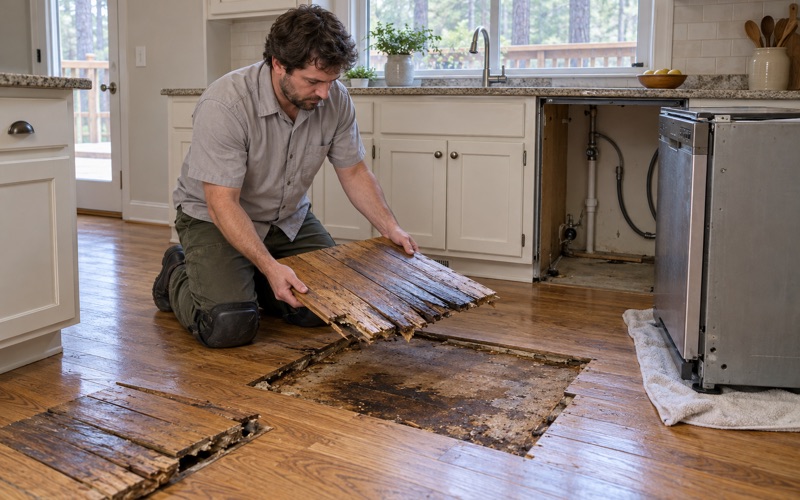
Worker lifting out a swollen section of oak flooring beside a dishwasher in an Alpharetta kitchen after a leak.

Hardwood Floor Water Damage

Water-damaged hardwood traced to its source, dried, measured and documented room by room before a single board is replaced.

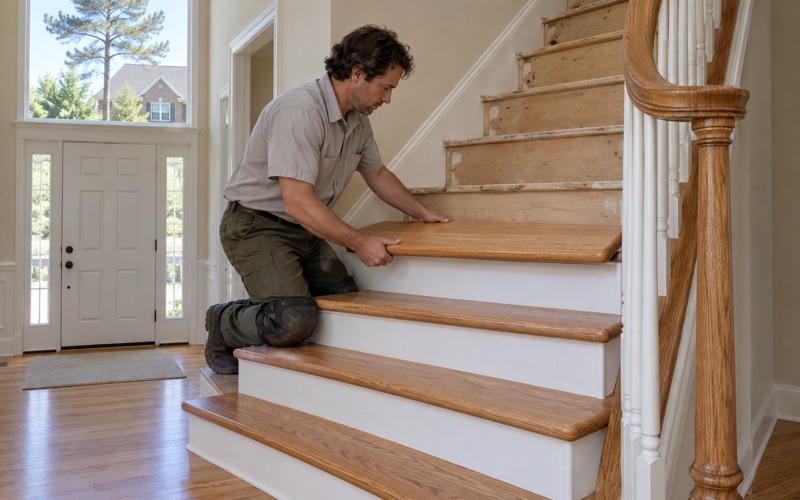
Worker setting a new oak stair tread with a rounded nose onto the foyer staircase of an Alpharetta house.

Hardwood Stairs

Carpeted stairs converted to hardwood and worn treads refinished, with every staircase priced tread by tread rather than by the square foot.

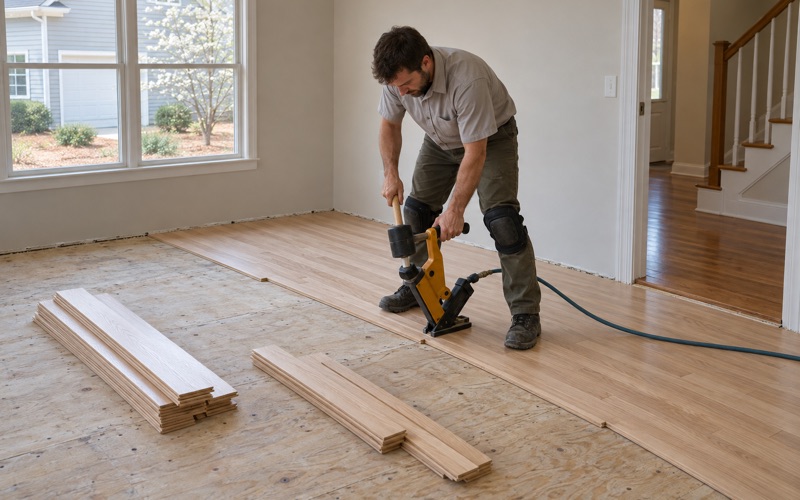
Worker striking a flooring nailer seated on the tongue of a solid oak board in a new floor going into an Alpharetta house.

Hardwood Floor Installation

Solid hardwood installed over a checked, flattened subfloor, with moisture readings recorded and fasteners set to NWFA guidelines.

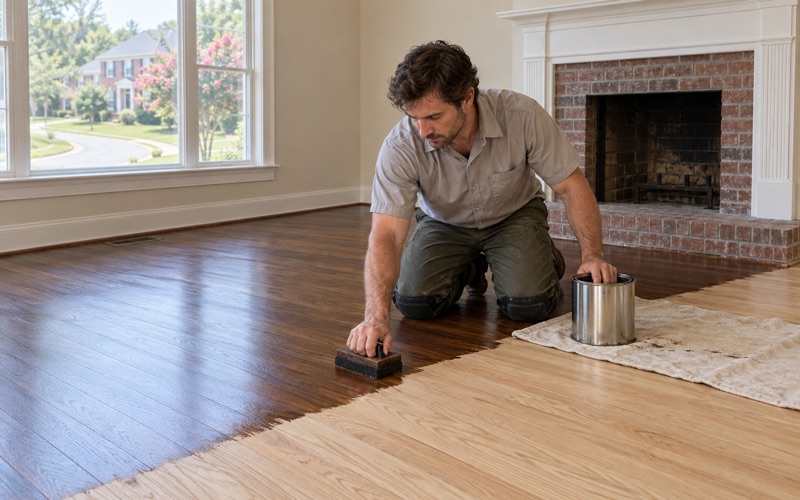
Worker working dark walnut stain into sanded oak floorboards with a stain pad in an Alpharetta living room.

Hardwood Floor Staining

Floors stained to a color chosen from samples on your own boards, with the sanding and prep that keep the color even from wall to wall.

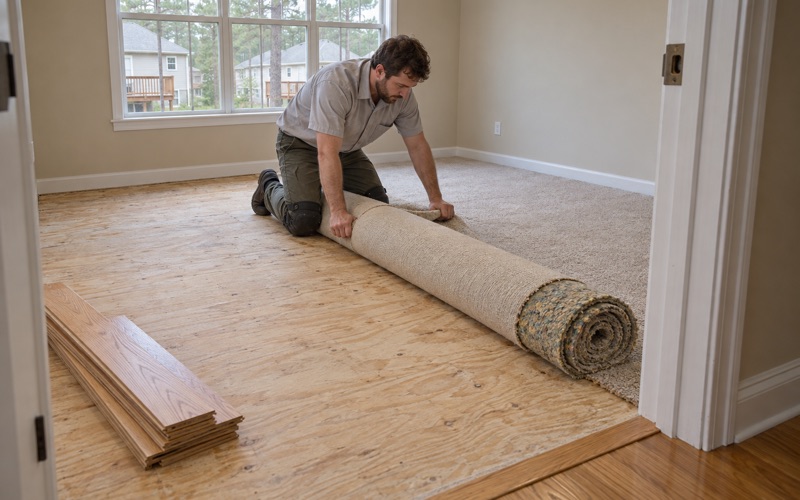
Worker rolling up old carpet from an upstairs bedroom in an Alpharetta house where new hardwood will be installed.

Replace Carpet With Hardwood

Builder-grade carpet, laminate and vinyl plank replaced with real hardwood, from a single bedroom to the whole upstairs and the stairs.

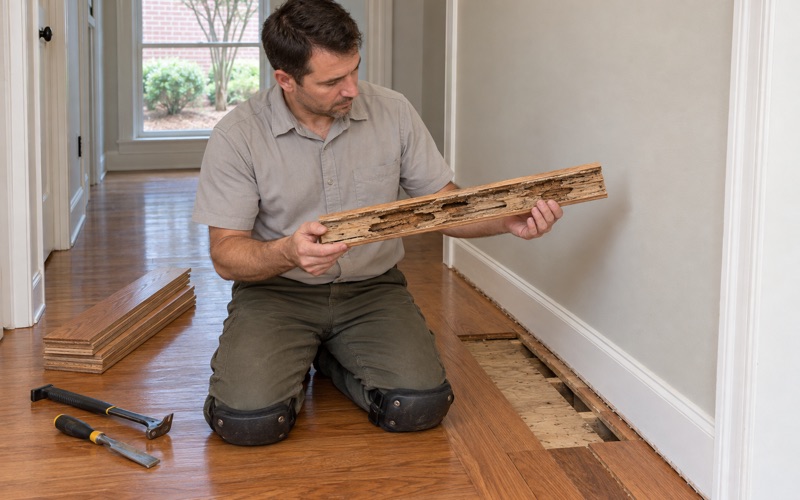
Worker holding a termite-damaged oak board with hollowed channels, cut out of a floor in an Alpharetta home after treatment.

Termite Damage Hardwood Floor

Termite-damaged hardwood cut out after treatment and rebuilt with matching boards, with itemized estimates for buyers and sellers facing a closing date.

Worker running a floor buffer with a screen pad across a sound oak floor before a fresh coat of finish in an Alpharetta home.

Screen And Recoat Hardwood Floors

A worn but intact finish abraded and recoated in about a day, with an adhesion test first so the new coat bonds to the old one.

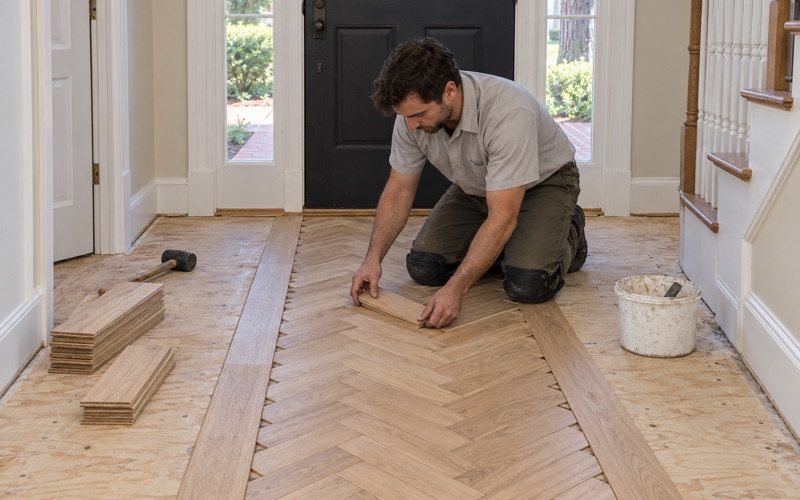
Worker setting white oak herringbone slats along a centerline in the entry hall of an Alpharetta house.

Herringbone Wood Floor

Herringbone, chevron and wide plank wood floors laid out square to the room, with borders and transitions planned before the first board.

Two Decades of Hardwood Floor Work

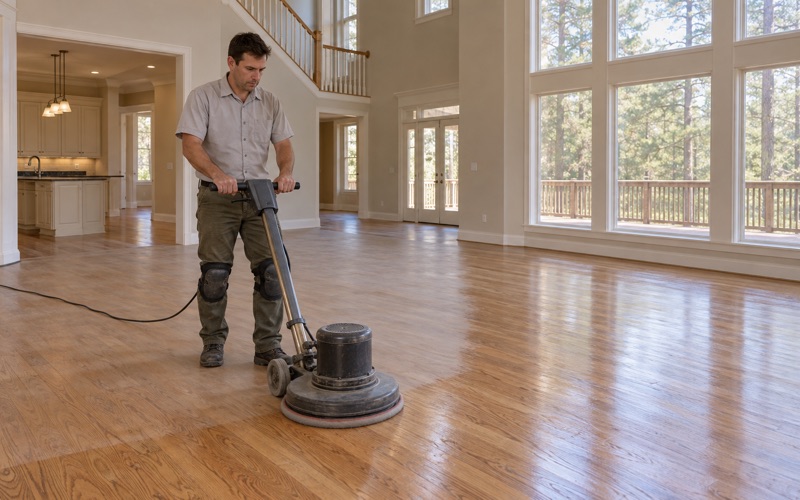
Worker guiding a drum sander along red oak strip flooring in the two-story family room of a 1990s house in Alpharetta.

20+ Years on Wood Floors

We have been sanding, repairing and installing wood floors for more than 20 years, which means most of the problems on this page are ones we have already opened up, dried out and rebuilt. That experience shows up in the questions we ask at the first visit, long before any machine is rolled into the house.

Why Choose Alpharetta Wood Flooring

Moisture Read First

Every cupped floor gets moisture meter readings across the boards and a look at the crawlspace, terrace level or supply lines beneath it, because North Fulton summers load the air with humidity, so the source is fixed first rather than sanding raised edges flat while the boards are still wet and leaving a floor that crowns once it dries.

Termite Repairs Woven In

No board chewed by subterranean termites gets filled, puttied or hidden under a rug; we wait for the pest control company’s treatment, cut the damaged run back to sound wood and weave in matching stock, so the repair holds and disappears rather than leaving soft wood under fresh finish.

Oak Checked Before Sanding

In Alpharetta, 34.6 percent of homes were built in the 1990s and another 35.6 percent since 2000, and many have site-finished oak that has been sanded before, so we measure the wood left above the tongue at a vent or threshold rather than running a drum sander blind toward the groove.

Stairs Priced Per Tread

Every staircase is quoted tread by tread and riser by riser, because a flight with nosings, returns and a landing takes far more hand work than its square footage suggests, so the number you approve holds rather than climbing once the stairs are measured properly.

HOA Approval in Writing

Never do we start a floor in a townhome or condominium without the association’s written approval in hand, because many Alpharetta master plans run a neighborhood HOA and a separate amenity association, and any interior flooring rule comes from your declaration rather than state law, so the job is not halted halfway by a violation letter.

Water Damage Documented

Each water-damaged floor is traced to its source, dried and measured with readings recorded room by room, so the adjuster sees what the floor looked like before a board was pulled rather than weighing a contractor’s word against the insurer’s.

When The Floor Has Gone Wrong

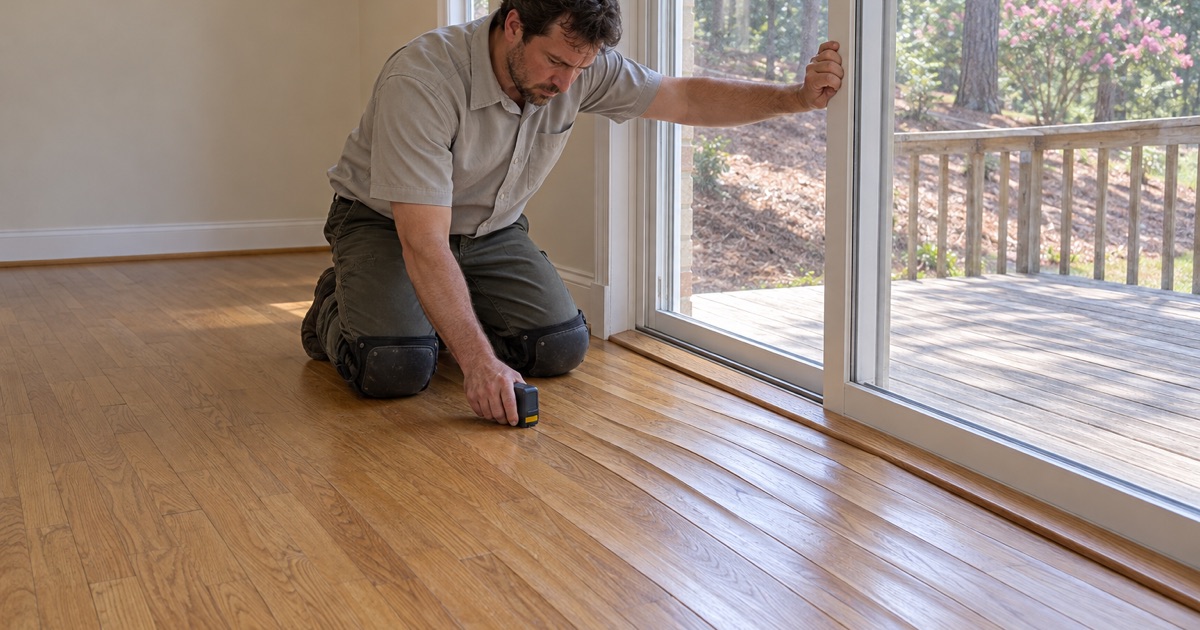
Worker pressing a moisture meter onto cupped oak boards in front of a sliding door in an Alpharetta house during a humid summer.

Cupping and Buckling After a Humid Georgia Summer

Cupping happens when boards take on moisture from below faster than from above, so the edges rise and each board forms a shallow dish. Buckling is the extreme case, where the floor lifts away from the subfloor. We find the moisture source with a meter and a look underneath, dry it out, and only then decide whether the floor needs sanding at all.

Cupped Oak in a Vacant House With the AC Off

A house left empty for a listing or an estate settlement with the air conditioning shut off can cup over a single summer. Many of those floors settle back once the house is conditioned again. We take readings over time and sand only what stays raised, rather than flattening boards that would have recovered on their own.

Termite Damage Under the Finish or at a Closing Inspection

Subterranean termites eat the soft wood inside a board and leave the finished face intact, so damage often shows up as a soft spot, a blister in the finish or a line of mud tubes along a joist. We open the floor, trace how far the damage runs, and replace it with matching boards once treatment is done.

Leaks From a Dishwasher, Refrigerator Line or Supply Valve

Slow leaks from a dishwasher, an ice-maker line or a sink supply valve soak into the subfloor for weeks before the boards show it. By the time the floor cups or the finish turns gray, the wet area is usually larger than it looks. We map it with a moisture meter, dry it, and replace only the boards that will not recover.

Black Pet Urine Stains Down to the Subfloor

Pet urine reacts with the tannins in oak and turns the wood gray to black, and repeated accidents soak past the finish into the board and the subfloor below. Sanding rarely removes a black stain because it runs through the wood. We cut those boards out, check the subfloor for odor and rot, and weave in new stock.

Squeaks, Popping and Loose Floorboards

Squeaks come from boards or subfloor rubbing against nails and joists as they move, and popping often means a board has lost its grip on its fasteners. We find the loose areas from above and, where we can reach them, from underneath, then refasten or shim so the floor stays quiet rather than hiding the noise with trim screws that loosen again.

Hollow-Sounding Glue-Down Engineered Floors

A glue-down engineered floor that sounds hollow when you tap it has lost its bond to the slab or subfloor, usually from moisture, a poor adhesive spread or an uneven surface. Small hollow spots can be injected with adhesive through tiny holes, while larger areas need the boards lifted and reset. We map every hollow spot before recommending either.

Swollen Laminate and Separating Vinyl Plank

Laminate has a fiberboard core that swells at the seams when it gets wet and does not shrink back, and luxury vinyl plank can separate at the joints as a floating floor moves with temperature. Neither can be sanded. We replace the damaged run or, often, the whole floor with hardwood that can be refinished for decades.

Scratches, Dents and Worn Traffic Lanes

Worn traffic lanes through a kitchen or hallway mean the finish is gone and bare wood is taking the wear. Light scratches that sit only in the finish can often be handled with a screen and recoat, while dents and gray lanes need a full sanding. We test the floor to tell you which one you are looking at.

A Floor Finish That Stayed Tacky or Peeled

A finish that stays tacky, peels or flakes between coats usually points to contamination on the floor, a product applied over polish or cleaner, or coats that were not compatible with each other. Another coat on top does not fix it. We sand back to a clean surface and rebuild the finish with one compatible system.

Bringing Back The Floor You Already Have

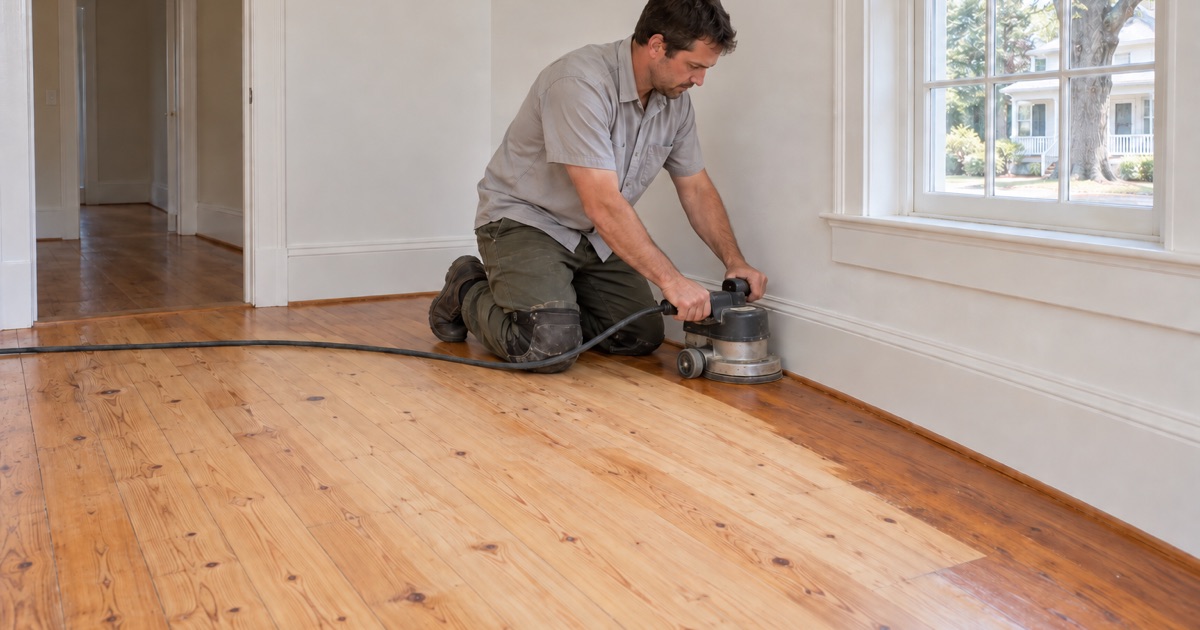
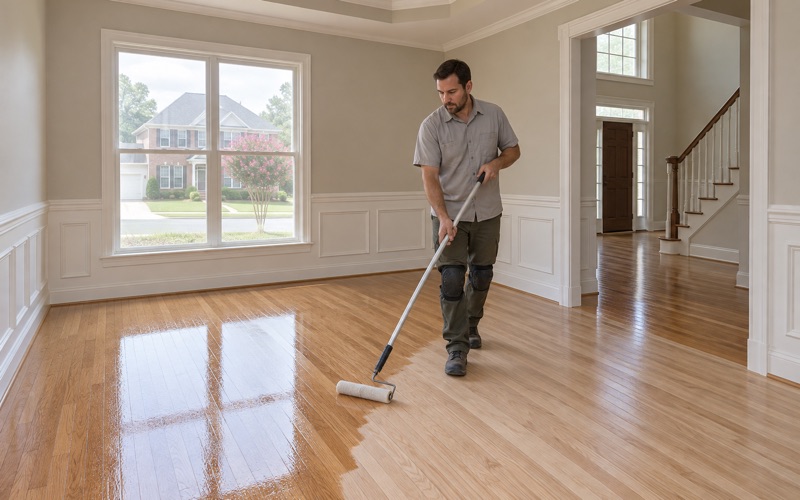
Worker running an edger along a baseboard where yellowed old pine floor is being sanded back to natural color in an Alpharetta home.

Full Sanding to Bare Wood Versus a Screen and Recoat

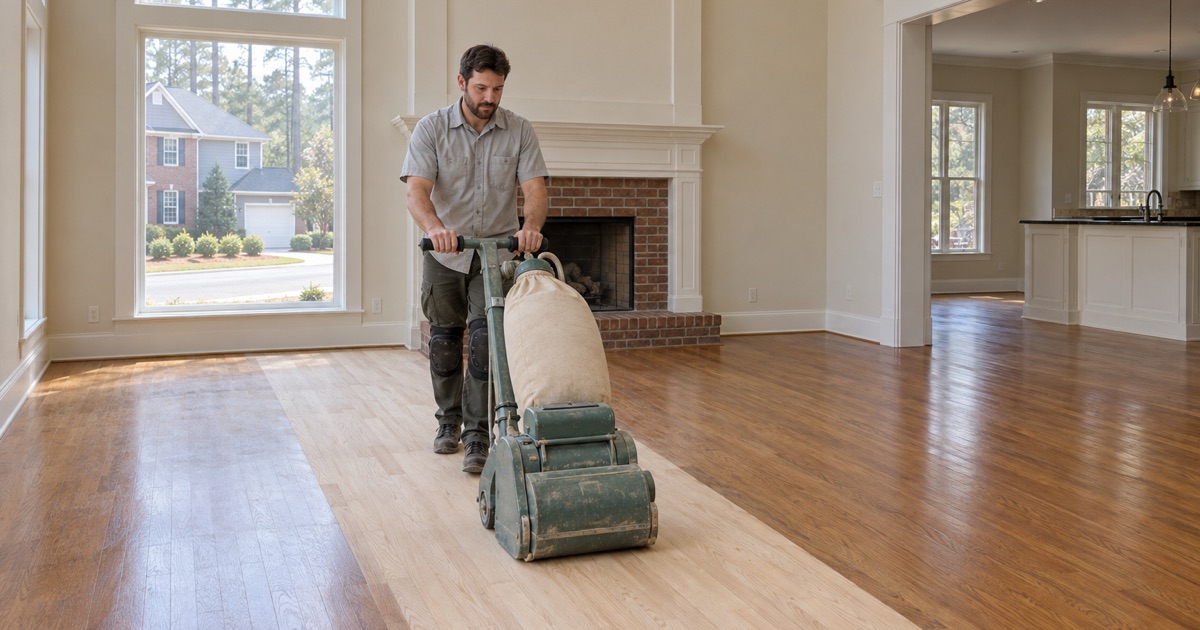
A full sanding takes the floor back to raw wood with a drum sander through a grit sequence, removing scratches, stains and the old finish. A screen and recoat only abrades the top coat and adds fresh polyurethane, which is quicker but cannot change color or remove anything below the finish. We tell you plainly which one your floor needs.

Orange, Yellowed Oak Taken Back to Natural

Orange oak is usually red oak under an oil-modified polyurethane that has ambered with age and sunlight. Sanding it to bare wood and finishing with a waterborne polyurethane, sometimes over a neutralizing stain, gives a lighter, more natural tone. That color then stays much closer to how it looked on the day it was finished.

Refinishing Old Heart Pine

Heart pine is dense, resinous and often face-nailed, with nail heads that have to be set before a sander can pass over them. The resin can gum sandpaper and react with some finishes. We sand heart pine more gently than oak and choose a finish that suits the wood rather than forcing it to look like oak.

Changing the Stain Color on 1990s and 2000s Oak

Many oak floors from the 1990s and 2000s were finished in golden or honey tones that look dated now. A full sanding removes the old stain so the floor can go darker, grayer or back to natural. Before we commit, we check how much wood remains above the tongue, because a floor sanded before has less left to give.

Blotchy Stain on Maple or Pine Floors

Maple and pine absorb stain unevenly, so a color that looks even on oak turns blotchy and streaked on them. Water popping, a conditioner or a lighter color can help, and sometimes the honest answer is a clear finish. We test on your floor first so a blotchy result shows up on a sample, not across the living room.

Refinishing Hardwood Stairs Tread by Tread

Stair treads, risers and nosings cannot be reached with a floor sander, so each one is sanded by hand and with smaller machines. That work is slow and detailed, which is why we price stairs per tread. The result matches the finish on the floors at the top and bottom of the flight.

Board Replacement That Disappears Into the Floor

Good board replacement means cutting out damaged boards in a staggered pattern, weaving in new tongue-and-groove stock that matches species, width and grain, and then sanding and finishing the area with the rest of the room. A square patch dropped into a floor always shows. We match the stock before we cut anything.

Dustless Sanding and Staying Home During the Work

Dustless sanding systems pull most of the dust into a vacuum at the sander, which keeps the rest of the house far cleaner than open sanding. You can usually stay home while we work, though not in the rooms being sanded or while finish is curing. We plan the order of rooms around how you live.

Refinishing Floors Before a House Goes on the Market

Freshly refinished hardwood is one of the most visible changes in a listing, and it costs far less than new flooring. We schedule the work around photography and showings, suggest colors that suit a broad range of buyers, and allow enough cure time for furniture to return before the first open house.

Stain Samples Laid on Your Own Floor

A stain color on a sample card looks nothing like it will on your species, under your windows and next to your cabinets. We sand a small area and lay several stain samples on your own floor, so you can see them in morning and evening light before a color is chosen.

Putting In New Wood Floors

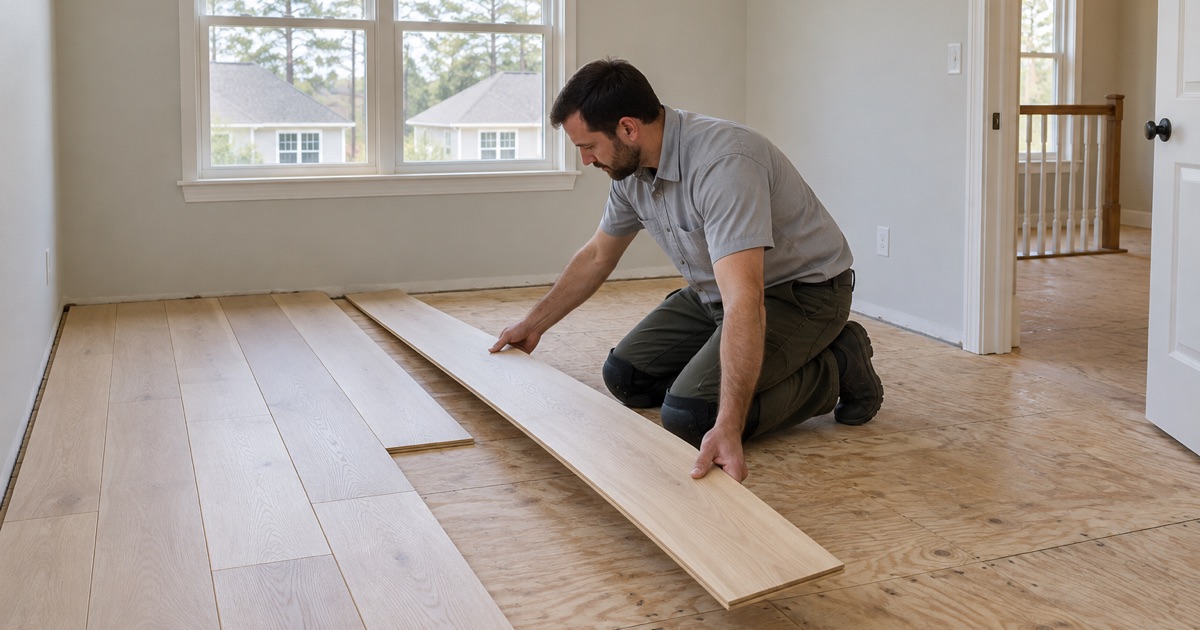
Worker laying out a dry row of wide white oak planks on a plywood subfloor in an upstairs room of an Alpharetta house.

Replacing Carpet With Hardwood, One Room or the Whole Upstairs

Replacing carpet means pulling the carpet, carpet pad and tack strip, checking the subfloor for squeaks and flatness, and installing hardwood that meets existing floors with a clean transition. Many owners start with one room and finish the upstairs later. We plan reducers and thresholds so the rooms join well either way.

Carpeted Stairs Converted to Wood Treads and Risers

Carpeted stairs are usually built with rough treads meant to be covered. Converting them means new hardwood treads, risers and nosings cut to fit each step, with the finish matched to the floor. We quote the job tread by tread and riser by riser, including returns on any open side.

Solid Hardwood, Engineered Wood and Vinyl Plank Compared

Solid hardwood can be sanded many times but reacts to moisture; engineered wood has a real wood wear layer over a stable core and suits slabs and lower levels; luxury vinyl plank resists water but cannot be refinished. We explain what each will be like in your house over twenty years, not just on installation day.

Engineered Flooring on a Terrace Level or Over a Slab

Terrace-level rooms and daylight basements sit partly below grade, where solid hardwood does not belong. Engineered wood with a stable core and a vapor retarder handles those conditions, either glued down or floated. We match the look to the floors upstairs so the lower level does not read as an afterthought.

Prefinished Versus Site-Finished Hardwood

Prefinished boards arrive with a factory finish and go in quickly, with small bevels between boards and no sanding dust. Site-finished floors are sanded and finished in place, which gives a flat, seamless surface and any stain you like. We explain how each one wears and how each is refinished later.

White Oak and Wide Plank Floors

White oak has a tighter grain and a cooler tone than red oak, and it takes gray and natural finishes well. Wide plank boards show more of the grain but move more with humidity, which makes acclimation and moisture control more important. We help you choose widths that suit the room and the house.

Herringbone and Chevron Wood Floors

Herringbone and chevron floors are laid from short boards set at angles, with a layout that has to be centered and squared on the room before the first board goes down. The work is slower than a straight lay and priced that way. Done well, the pattern runs true from wall to wall.

Nail-Down, Glue-Down and Floating Floor Installation

Solid hardwood is usually nailed to a wood subfloor, while engineered floors can be nailed, glued to a slab or floated over underlayment. The subfloor, the level of the room and the product decide the method. We choose it for your house and the conditions under it rather than for our own convenience.

Flooring Cleats or Staples, and Why the Fastener Matters

Flooring cleats and flooring staples both hold tongue-and-groove boards to the subfloor, but they behave differently as wood moves. The right fastener, spacing and length follow the manufacturer’s instructions and the NWFA Installation Guidelines. Getting it wrong shows up later as squeaks, gaps or split tongues.

Acclimation and Moisture Readings Before the First Board

Wood has to reach a moisture level close to the conditions it will live in before it is installed, and the subfloor has to be dry enough to receive it. We take readings of boards and subfloor, record them, and leave an expansion gap at the walls so the floor can move with the seasons.

Closings, Claims, HOAs And Rentals

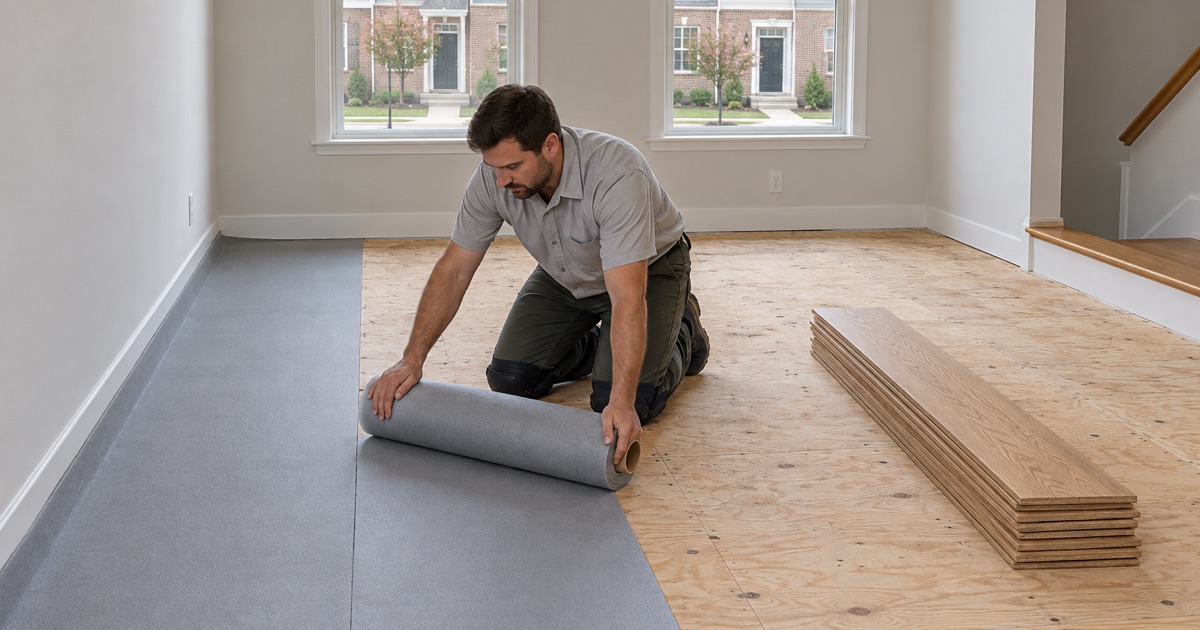
Worker unrolling underlayment across the plywood subfloor of an Alpharetta townhouse before new hardwood goes down.

What a Georgia Termite Letter Covers at Closing

The Official Georgia Wood Infestation Inspection Report, usually called the termite letter, records what the inspector could see on the day of inspection. It is not a warranty against damage hidden under a finished floor. When the report notes damage, we inspect the flooring and write a repair scope that fits the closing date.

Termite Floor Repair After Treatment, and Who Pays

We repair termite-damaged floors after the pest control company has treated, so new boards are not laid over an active colony. Who pays depends on your purchase contract and any termite bond, not on the floor itself. We give buyers and sellers an itemized repair estimate they can hand to their agents.

Documenting Floor Water Damage for the Adjuster

Adjusters want to know where the water came from, how far it spread and what the floor looked like before anything was removed. We record moisture readings room by room, photograph the damage, and write down what must be replaced and why. That record makes the claim much easier to settle.

Matching New Boards to the Old Floor on a Claim

A repair that replaces a strip of boards in the middle of a room can leave an obvious line where new meets old. Matching species, width, grade and finish is part of doing the repair properly. When a match cannot be made invisible, we document why so the adjuster understands the full scope.

HOA Approval and Your Declaration’s Floor Rules

The Georgia Condominium Act and the Georgia Property Owners’ Association Act govern how associations operate, but a rule about interior flooring comes from your own declaration and the association’s architectural guidelines. Some require approval or a sound-rated underlayment before hard flooring goes in. We confirm written approval before work starts.

Underlayment for Wood Floors in Townhomes and Condominiums

In shared buildings, footsteps on a hard floor travel into the unit below or next door. Many associations require an underlayment to reduce that sound before wood replaces carpet. We read your association’s rule, choose an underlayment that meets it, and keep the product data sheet for your records.

Move-Out Floor Damage and Normal Wear on a Rental

A Georgia landlord’s move-out inspection list under O.C.G.A. 44-7-33 has to name damage beyond normal wear and tear. Worn finish in a traffic lane is wear; a pet stain or a deep gouge is usually damage. We give landlords itemized floor estimates that separate the two, line by line.

Lead-Safe Floor Work in Homes Built Before 1978

The EPA RRP Rule applies lead-safe work practices to renovation in most homes built before 1978, and sanding near painted trim or stairs can fall under it. Only a small share of Alpharetta’s housing is that old, but we check the build year and any painted surfaces before sanding so the right practices are in place.

Old Floor Tile and Black Mastic Under the Carpet

Pulling carpet in an older house sometimes exposes old floor tile or black mastic adhesive, some of which can contain asbestos. That material should not be sanded or scraped until it has been tested. We stop, recommend testing, and plan the new floor around the result rather than guessing.

Choosing a Wood Floor Finish by Its VOC Category

The federal rule on VOCs in architectural coatings, 40 CFR 59 Subpart D, places clear wood finishes in their own categories, separate from the floor-coating category that covers opaque coatings. We choose finishes by the category that actually applies to them, and explain the tradeoffs between waterborne polyurethane, oil-modified polyurethane and hardwax oil.

Areas We Serve

Alpharetta Wood Flooring provides wood-flooring throughout the greater Alpharetta area, with the same crews and the same standards on every job.

Good to know

Frequently Asked Questions

How is the price of refinishing a hardwood floor worked out?

Refinishing is priced on the square footage of the rooms, the condition of the wood, whether the floor is stained or left natural, and how many stairs are involved. Board replacement, pet stain repair and moisture problems are itemized separately. We give a written number after we have seen the floor and taken readings, because a price quoted over the phone usually leaves out whatever made the floor need work.

How long does a refinishing job take?

Most single-level refinishing jobs take a few working days from the first pass of the sander to the last coat of finish, with stain and extra coats adding time. After that the finish needs to cure before rugs and heavy furniture go back. We give you a day-by-day schedule before we start so you can plan around it.

Can an engineered hardwood floor be sanded and refinished?

It depends on the thickness of the engineered wear layer, the real wood on top of the core. Thicker wear layers can be sanded once or more, while very thin ones can only take a screen and recoat. We check the wear layer at a vent or edge before recommending anything, so the sander never breaks through to the core.

Do you take on small repairs, or only whole floors?

We take on small jobs, including a few boards lost to a leak, a single pet stain, a loose stair tread or a squeak in a hallway. Small repairs still get the same care with matching stock and finish, because a patch that shows is a patch you will be looking at for years.

Should I refinish my existing floor or replace it?

If the boards are sound, there is enough wood above the tongue, and the damage is limited to the finish, stains or a few boards, refinishing is almost always the better value. Replacement makes sense when the floor has been sanded too many times, when moisture damage is widespread, or when the flooring is laminate or vinyl that cannot be sanded. We show you what we found before you decide.

Which finish is best for a busy household with pets?

Waterborne polyurethane stays clear and dries quickly, oil-modified polyurethane gives a warmer amber tone, and hardwax oil is easy to spot-repair but needs more regular care. A lower sheen level hides scratches from dogs and children better than gloss. We walk you through how each finish will look and wear in your house before you choose.

Can hardwood go on a terrace level or basement floor?

Solid hardwood does not belong below grade, where moisture from the slab and the ground can cup and buckle it. Engineered wood with a stable core, installed over a vapor retarder and glued down or floated, is built for those rooms. We test the slab before recommending a product for a lower level.

How soon can furniture and rugs go back on a new finish?

Light foot traffic in socks can usually start the day after the final coat, furniture can return a few days later with felt pads, and rugs should wait longer so the finish can cure fully underneath. The exact timing depends on the finish system, and we leave written care instructions for the one we used.

What should I do first when I find water on my wood floor?

Stop the source if you can, soak up standing water, and run fans and air conditioning to start drying the room. Do not pull up boards or sand anything yet. Call us and your insurer, and we will take moisture readings and photographs that record the damage before anything is removed.

Ready to Get Started?

Request a free quote today and we'll get back to you fast.