Alpharetta Wood Flooring repairs termite damage in hardwood floors in Alpharetta, GA and has spent 20+ years rebuilding floors that subterranean termites got into first, serving surrounding cities including Roswell, Milton, Peachtree Corners, Norcross and Sandy Springs. We cut out the damaged boards after treatment, repair what lies beneath them, and weave in matching stock so the floor looks like it was never touched.
Termite damage often surfaces at the worst moment: a soft spot noticed while moving furniture, or a line on an inspection report a few weeks before closing. Either way, the questions are the same. How far does the damage go, what has to be replaced, and how long will it take? We answer those at the first visit with a written scope you can hand to your agent or your buyer.
We never fill, putty or cover termite-damaged boards. Wood that termites have hollowed out has lost its strength, and hiding it under fresh finish only postpones a bigger repair.
Recognizing Termite Damage in a Wood Floor
Signs on the Surface
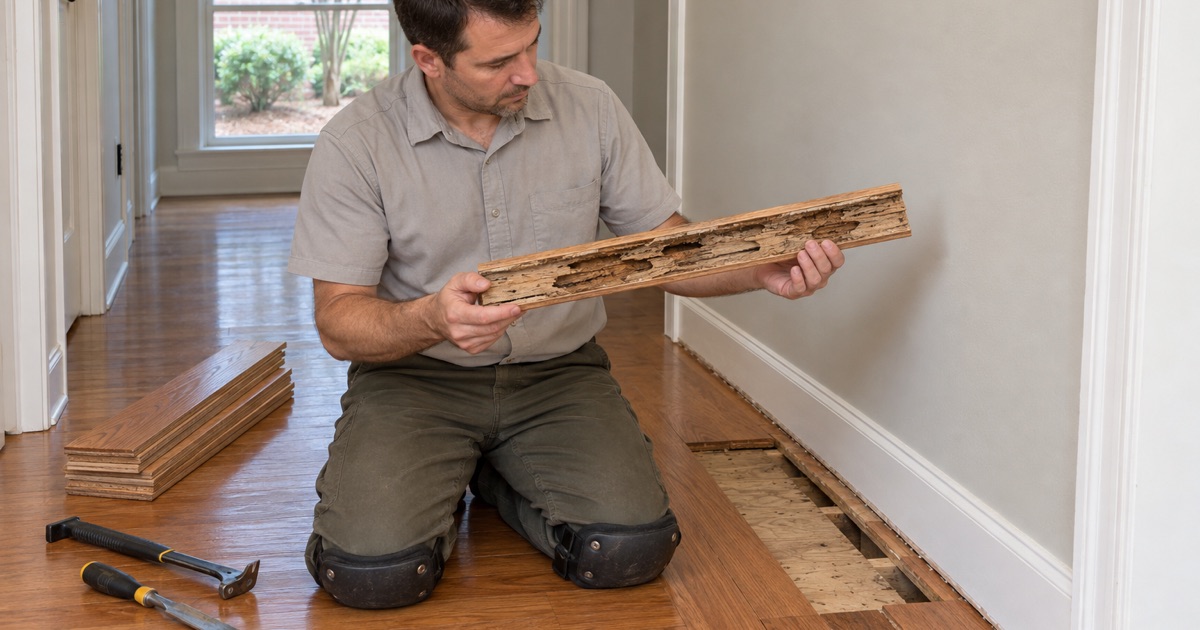
Subterranean termites eat the soft wood inside a board and leave the harder face behind, so the floor can look nearly normal. Look for blistering or rippling in the finish, boards that feel soft or dip underfoot, small holes, and a hollow sound when tapped. Damage often runs along the grain, following the path the termites took.
Moisture helps termites, so damage is more common near bathrooms, kitchens, exterior doors and anywhere a leak has kept the wood damp. A floor that also shows cupping in those areas deserves a closer look.
Signs Below the Floor
Mud tubes on foundation walls, piers or joists are the clearest sign of subterranean termites. Frass, the debris they leave behind, may collect near damaged areas. From a crawlspace, we look at the underside of the subfloor and the joists, where damage is often worse than the finished floor suggests.
Damage Versus Other Problems
Not every soft spot is termites. Rot from a long-term leak, a failed subfloor seam or an old repair can feel similar. We open the floor enough to see what caused the damage, because the right repair and the right people to call depend on the answer.
Repairing After Treatment
Treatment Comes First
We repair termite-damaged floors after a pest control company has treated the house. Laying new boards over an active colony only feeds it. If treatment has not happened yet, we can inspect and estimate, then schedule the repair once the treatment is complete.
Opening the Floor and Tracing the Damage
We remove damaged boards and keep going until we reach sound wood in every direction. That often reveals more damage than the surface showed, particularly in the subfloor. Damaged subfloor is cut out and replaced, and any joist damage is shown to you before we go further.
Where the joists themselves have been weakened, a carpenter or structural repair may be needed before flooring goes back down. We tell you plainly when a problem is beyond flooring.
Weaving In Matching Boards
New boards are woven into the existing floor in a staggered pattern so the repair follows the original layout. We match species, width and grade, then sand and finish the repaired area. On a site-finished floor, that usually means refinishing the room or running to a doorway so the color and sheen blend.
On prefinished floors, we look for the same product or a close match. Matched prefinished boards can sometimes be installed without refinishing anything else.
Termite Damage at Closing
What the Georgia Termite Letter Covers
The Official Georgia Wood Infestation Inspection Report, usually called the termite letter, is the form Georgia rules provide as a basis for transfer of real property. It records visible evidence of termites and other wood-destroying organisms. It is not a structural report, so it does not tell a buyer or seller how far damage extends into the floor.
When the report notes damage, the next step is someone who can open the floor and measure it. That is the evaluation we provide, in writing.
Helping Sellers Meet a Closing Date
Sellers often have only a few weeks between the inspection and closing. We give a written repair scope and timeline at the first visit, coordinate with the pest control company’s treatment date, and schedule the work to finish before the closing. The estimate is itemized so both sides can see what is being repaired.
Who Pays for the Floor Repair
Who pays depends on the purchase contract and any termite bond in place, not on the flooring itself. Some bonds cover treatment only, while others include repair of new damage. We document the damage and the repair so whoever is responsible has what they need to decide.
Buyers benefit from the same paperwork. A written record of what was found, what was replaced and when the floor was finished answers questions later, whether from a lender, an insurer or the next buyer when the house sells again.
Preventing the Next Round
Moisture Control Under the Floor
Subterranean termites need moisture, so a damp crawlspace invites them back. A vapor retarder over bare soil, working gutters and downspouts, and fixed plumbing leaks all reduce the risk. We note any moisture problems we see while the floor is open.
Keeping a Bond in Place
A termite bond with a pest control company provides ongoing inspection and, depending on its terms, treatment or repair. Keeping one active after a repair protects the new wood and the rest of the house. We can share our repair documentation with your pest control company for their records.
- 20+ Years on Wood Floors
- Moisture Readings Before Sanding
- Stairs Quoted Tread by Tread