
Alpharetta Wood Flooring replaces carpet with hardwood in Alpharetta, GA and has spent 20+ years swapping tired carpet for real wood floors, serving surrounding cities including Roswell, Milton, Peachtree Corners, Norcross and Sandy Springs. We take on single rooms, whole upstairs floors and carpeted stairs, and we replace builder-grade laminate and vinyl plank with hardwood as well.
Many homes in the area were built with hardwood on the main level and carpet everywhere else: bedrooms, bonus rooms, upstairs hallways and stairs. That carpet is often the original builder grade, worn in the traffic paths and flattened on the stairs. Replacing it with wood that matches the main floor makes a house read as one finished whole rather than a hardwood ground floor with carpet above.
We plan the project around what is already there: the species and color of your existing floors, the height of the tile in bathrooms, the stairs between levels and the doorways where each room meets the next. Getting those details right is what separates a carpet replacement that looks original from one that looks added later.
Removing Carpet and Preparing the Floor
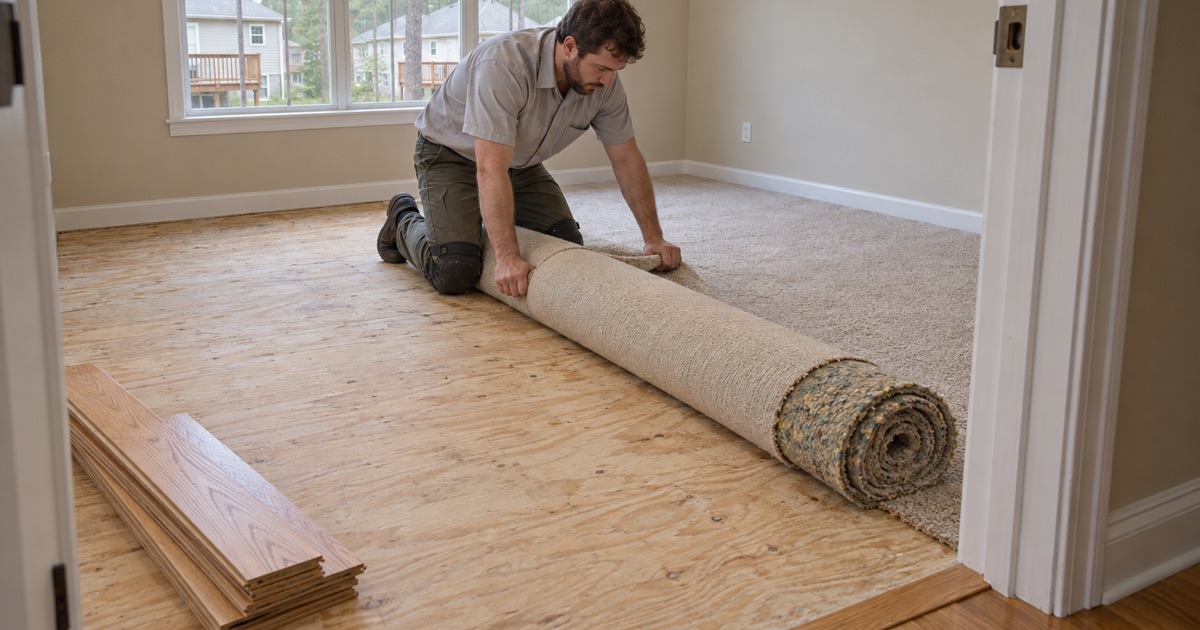
Carpet, Pad and Tack Strip Removal
We pull the carpet and carpet pad, remove the tack strip around every wall, and pull or set the staples left in the subfloor. It is dusty, unglamorous work, and it is also the first look at the condition of what lies beneath. We contain the mess and haul everything away.
Occasionally, the carpet turns out to be covering old hardwood. When that happens, we show you what we found, because refinishing an existing floor can cost much less than installing a new one.
Checking the Subfloor
Carpet and pad hide a lot. Squeaks, loose panels, uneven seams and old water stains all become visible once the carpet is gone. We fasten loose areas to the joists, sand down high seams, fill low spots, and take moisture readings before any hardwood is installed.
This is also where old pet accidents show up. Stained subfloor is sealed or replaced so odors do not come back through the new floor.
When the Floor Is Over a Slab
On terrace levels and some main floors, carpet sits directly on a concrete slab. Solid hardwood does not belong there without a wood subfloor built on top, which raises the floor height. Engineered flooring, glued down or floated over a vapor retarder, is usually the better choice.
We test the slab for moisture before recommending a product, because carpet can hide a damp slab that would cup any wood laid over it. When the readings are high, a moisture-control adhesive or membrane goes down first.
Upstairs Rooms and Bedrooms
One Room or the Whole Upstairs
Some owners start with a single bedroom or bonus room, while others replace every carpeted room upstairs at once. Doing it all together avoids transitions between carpet and wood at every doorway and gives one continuous floor. When a project is split into phases, we plan the layout so later rooms can be woven into the first.
Moving furniture is part of the planning. We work room by room where we can, so you keep some bedrooms usable while others are being done.
Sound Between Floors
Hardwood transmits footsteps more than carpet does, and upstairs bedrooms often sit over living rooms. An underlayment designed to reduce impact sound can help, along with area rugs in the rooms that need them. We discuss the options before ordering so the floor suits how your household uses each level.
Closets and Built-Ins
We run hardwood into closets for a finished look, or stop at the closet door with a threshold if you prefer to keep the closets carpeted. Built-in cabinets and window seats are floored around carefully, with trim added where needed.
Stairs and Transitions
Carpeted Stairs to Wood
Replacing carpet upstairs often means doing the stairs too, since carpet on the stairs next to wood at the top and bottom looks unfinished. We install new hardwood treads, risers and nosings, priced tread by tread, and stain them to match the floors. Stairs are usually the most noticeable part of the whole change.
Doorways, Tile and Thresholds
Where new hardwood meets bathroom tile, we fit a threshold or reducer so the edge is clean and safe to walk across. Door bottoms are checked and trimmed where needed. The goal is transitions that look planned rather than improvised.
Baseboards are another detail. Carpet usually leaves a gap under the baseboard that hardwood exposes, so we add quarter round or shoe molding, or reset the baseboard lower, to close it neatly.
Matching the Main Floor
When the upstairs meets an existing hardwood floor at the top of the stairs or across a landing, we match species, width and color so the two read as one. If the existing floor is site-finished, the new wood can be sanded and finished to match in place.
If the existing floor is worn, refinishing it at the same time as the new floor is finished gives the most even result. Both areas then take the same stain and sheen on the same day.
Replacing Laminate and Vinyl Plank
Why Owners Replace Them
Builder-grade laminate and luxury vinyl plank can wear, scratch, swell at the seams after a spill, or separate at the joints. Neither can be sanded and refinished. Replacing them with hardwood gives a floor that can be refinished for decades rather than replaced again.
Sellers and landlords sometimes chose laminate or vinyl for low upfront cost. For owners planning to stay, hardwood that can be sanded and refinished several times usually costs less over the life of the house than replacing a worn plank floor every decade or so.
Removal and Preparation
Floating laminate and vinyl usually lift out quickly, while glued products take more work to remove. We clean up the old underlayment and adhesive, check the subfloor, and prepare it exactly as we would after removing carpet.
- 20+ Years on Wood Floors
- Moisture Readings Before Sanding
- Stairs Quoted Tread by Tread